

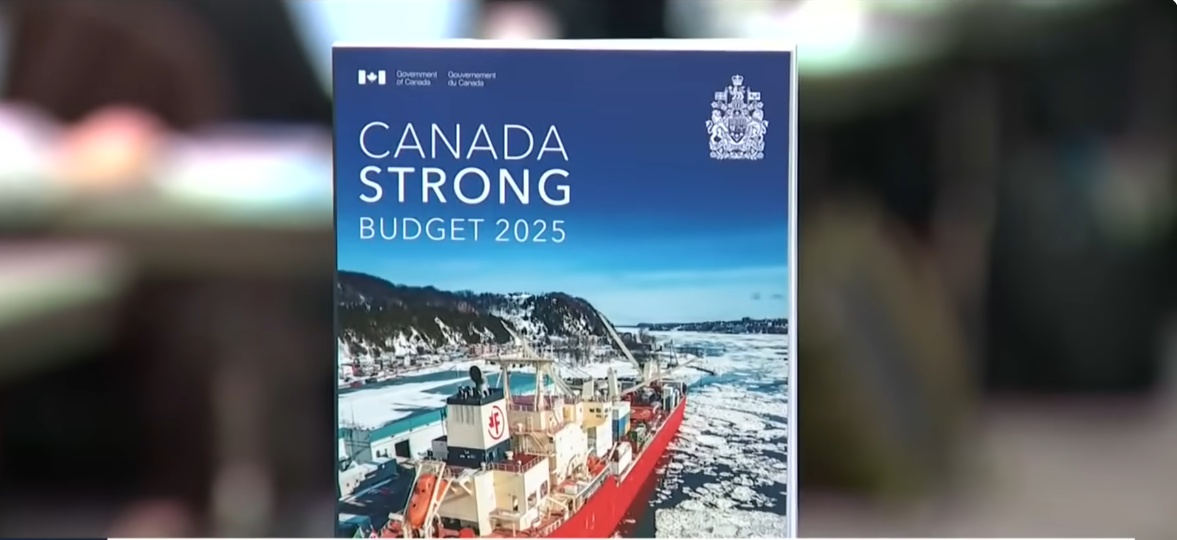

Budget 2025: Carney Government Unveils $1 Trillion Investment Strategy Amid Growing Fiscal Concerns
Ottawa – The federal government has tabled its first budget under Prime Minister Mark Carney, outlining a sweeping economic plan aimed at catalyzing more than $1 trillion in total investment across Canada over the next five years. The 2025 federal budget marks the first full fiscal blueprint since Carney took office, and the first national budget in more than a year.
“Budget 2025 is a plan to catalyze investments from provinces, territories, municipalities, Indigenous communities, and the private sector,” Carney told the House of Commons. The proposal includes $115 billion for infrastructure, $110 billion toward productivity and competitiveness, $30 billion for defense, and $25 billion for housing, all spread over five years.
However, this ambitious investment strategy comes with a significant price tag. The government projects the deficit for the current fiscal year to reach $78.3 billion, substantially higher than the Parliamentary Budget Officer’s recent $70 billion estimate, though lower than predictions from outside economists of up to $100 billion. Canada’s federal debt is expected to rise to $1.35 trillion.
The deficit-to-GDP ratio now sits at 2.5%, up from the 1% projected in the previous Liberal budget in 2024.
Government Splits Spending into Two Tracks
To reassure markets and address concerns about fiscal discipline, the Carney government is introducing a new spending framework that separates capital investments from operational spending.
The goal:
- Operational budget to return to balance by 2029
- Operational deficit expected to fall from $33 billion this year to $8.7 billion next year, eventually turning into a $2 billion surplus
To achieve this, Ottawa plans to reduce the federal workforce by 16,000 positions, largely through attrition and early retirements, aiming to shrink the public service by 10% from its recent peak.
Other savings include:
- Scaling back foreign aid spending
- Ending the federal program to plant 2 billion trees
- Targeted departmental reductions, excluding Defense, Indigenous Services, Women and Gender Equality, and Crown-Indigenous Relations
Minority Government Gains a Key Vote
In a critical political development, Nova Scotia MP Chris d’Entremont announced he is crossing the floor to join the Liberal caucus, moving the government one vote closer to securing the budget in a minority Parliament.
He cited infrastructure commitments and long-term economic planning as the reasons for his switch, saying the budget represents “the strong, community-building future Canadians need.”
Opposition Reaction
Conservative Shadow Finance Minister Jasraj Singh Hallan rejected the budget, calling it “more of the same failed spending approach”, arguing that increased deficits will worsen affordability challenges.
“There’s nothing in this budget for families struggling with food, housing, and rising costs,” he said.
The Bloc Québécois also signaled it is unlikely to support the budget, saying none of its pre-budget priorities were met.
The NDP has not committed either way but says talks will continue.
Expert View: A Long-Term Economic Shift
Former Parliamentary Budget Officer Kevin Page says the plan represents a strategic shift in Canada’s economic model—prioritizing infrastructure, supply chain resilience, and national competitiveness over short-term affordability measures.
He notes the challenge will be public patience:
“This is not a crisis budget. It’s a long-term reconstruction budget. The benefits will take time to show, and the pain is already being felt.”
What Comes Next
Debate on Budget 2025 begins this week. With the Liberals still short of guaranteed support, negotiations between parties are expected to continue over the coming days. If the budget fails, the government could fall, triggering a federal election.
For now, Carney maintains confidence:
“This is a budget for the moment. An investment in Canada’s future.”